Plantar Fasciitis Foot Pain
If you have plantar fasciitis you know the exact feeling in your foot when you get out of bed in the morning and experience those painful first few steps.
Heel pain, mostly caused by plantar fasciitis, is a very common foot pain complaint for many people.
It is estimated that 1 in 10 people will develop plantar fasciitis during their lifetime.
Th plantar fascia is a thick, weblike ligament that connects your heel to the front of your foot. It acts as a shock absorber and supports the arch of your foot.
As an osteopath I see this complaint a lot either as a patients primary concern or they may mention it not knowing that an osteopath can help.
It is important as an osteopath to identify factors associated with your plantar fasciitis which will help improve treatment outcomes and prevention strategies. These factors may include:
- foot posture
- lower limb biomechanics and joint restrictions
- poor choice in shoes
- change in exercise routine
- over-weight/ obesity
- heel spur
Heel spurs have commonly been implicated as a risk factor for plantar fasciitis. Current studies demonstrate a highly significant association between calcaneal spur and plantar fasciitis.
Some reports suggest that approximately 80-85% of patients with plantar fasciitis have excessive pronation, often referred to as flat feet. Despite the fact that the pronated foot posture and over-pronation during gait are commonly cited as causative factors for plantar fasciitis, there is conflicting evidence with regard to the stationary foot position compared to the biomechanics during walking.
Most experts agree that early recognition and management of plantar fasciitis leads to shorter treatments and greater chance of success with conservative therapies, such as osteopathy.
In most patients with plantar fasciitis, conservative treatment usually is sufficient. Initially, a period of rest accompanied by anti-inflammatory agents (ice/heat, NSAID’s) then progressing onto stretching, manual therapy, and orthotics/ insoles may also be recommended depending on foot position/ biomechanics.
In a study by Benedict F Digiovanni it has shown plantar fascia specific exercises had a substantial difference in plantar fasciitis management. The exercise researched is as shown in the picture, but please seek advice from a health professional before starting these exercises.
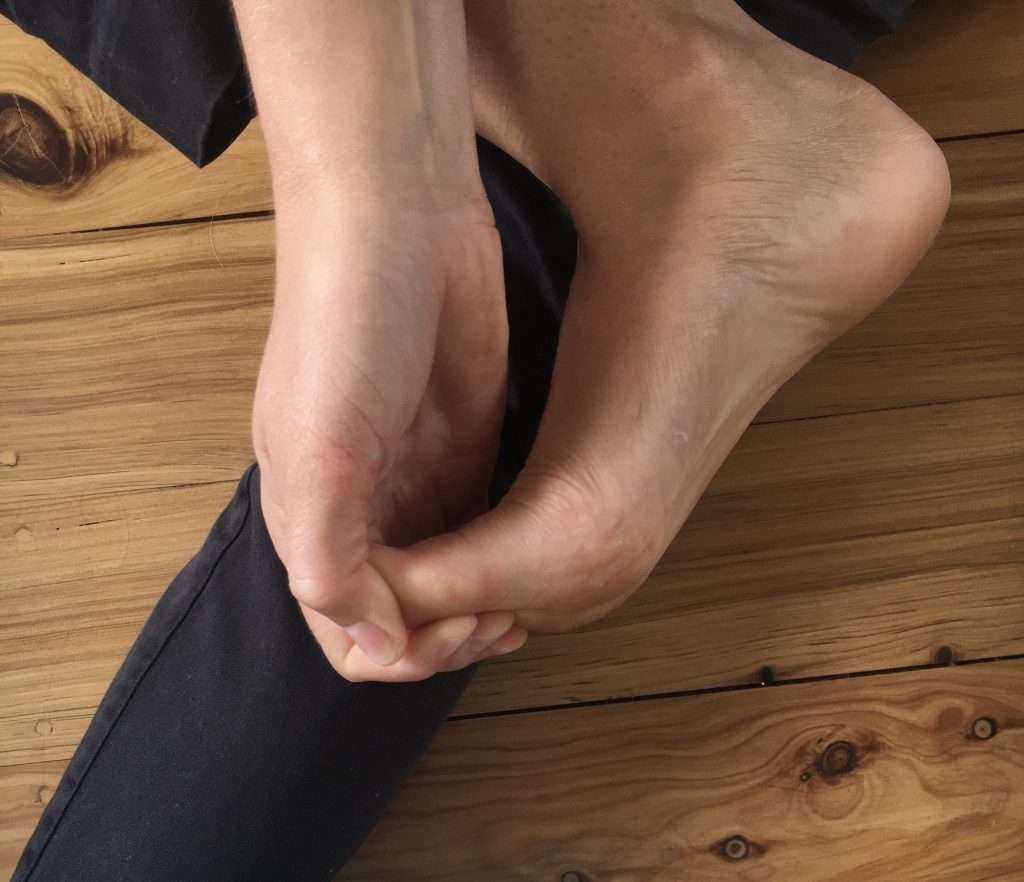
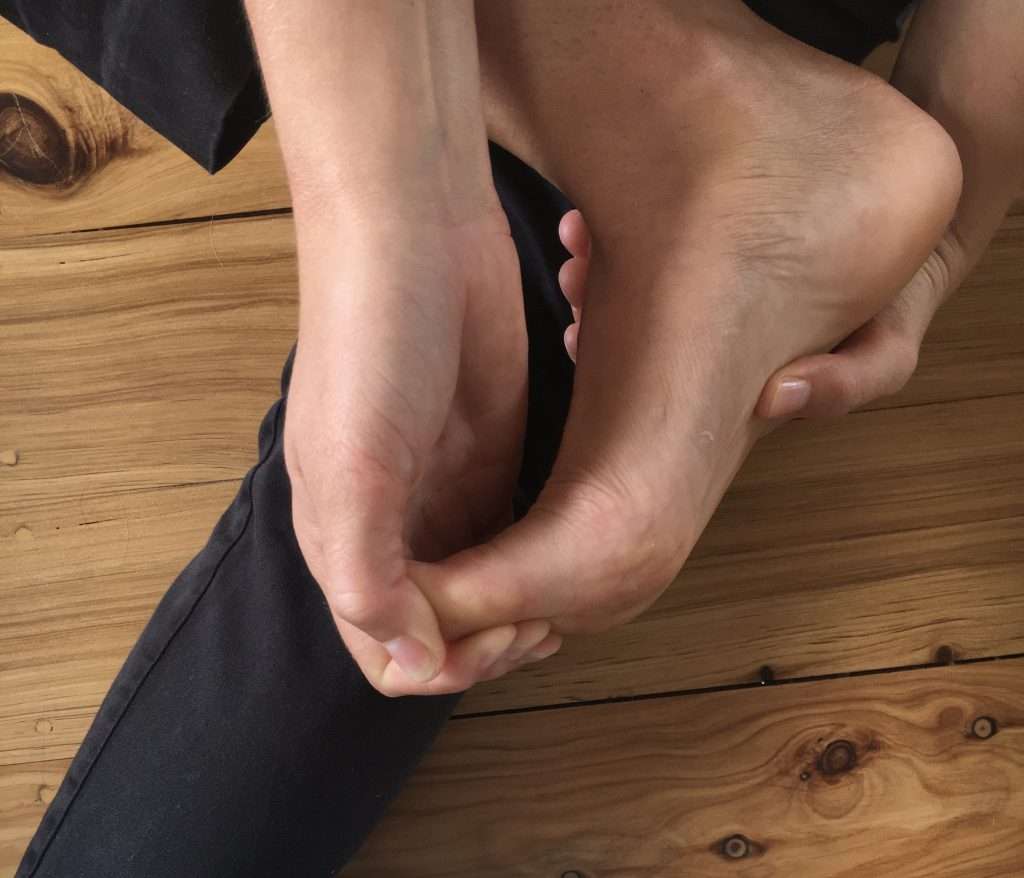
Plantar fascia-stretching exercise above: crossed the affected leg over the opposite leg. While placing your fingers across the base of the toes, pull the toes back toward the shin until you feel a stretch in the arch or plantar fascia. Confirmed that the stretch was correct by palpating tension in the plantar fascia. Complete the exercises for a 10 second hold, 10 times, 3 times a day.
If you are experiencing plantar fasciitis or foot pain, book in today to see what it is, what caused it and what you can do to manage and treat this pain.
Book online at www.southcoastosteo.com.au or call 0492 983 811
- Digiovanni BF, et al. (2006). Plantar fascia-specific stretching exercise improves outcomes in patients with chronic plantar fasciitis. A prospective clinical trial with two-year follow-up. Journal of Bone and Joint Surgery, 88(6): 1775–1781.